
Software
Who actually writes it?
AI drafts, a separate review decides
A person decides what is built. Every change is independently reviewed and tested before it ships.
Anyone can ask AI for an app. Making one that is safe, that fits your business and that grows with it takes specialists. We are the AI specialists, for businesses anywhere in the world.
Turn it into a
Every business has a spreadsheet like this one. Press a button to see what replaces it.
| A | B | C | D | E |
|---|---|---|---|---|
| Mrs Okafor | 09:00 | Cut+colour | 65 | paid |
| D. Whitlow | 10:30 | Trim | 18 | ?? |
| same lady | 12:00 | colour | 65 | cash? |
| Priya (resc) | 2pm | Cut | 22 | paid |
| 15:15 | Beard | 12 | unpaid | |
| J Mensah | 16:00 | Cut+beard | 30 | paid |
Today
Tuesday, 6 jobsOutstanding
3 overdueBelow minimum
reorder before FridayBuilt by the same people with the same tools. Most are free, so try one now.
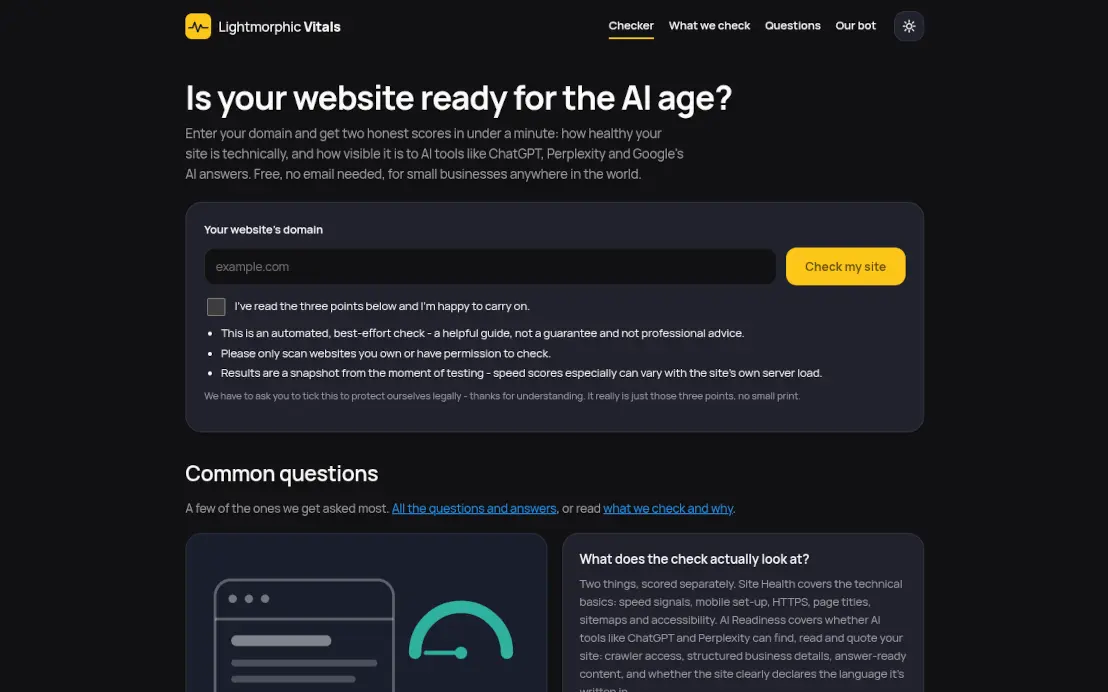 Lightmorphic VitalsFree website health and AI check.
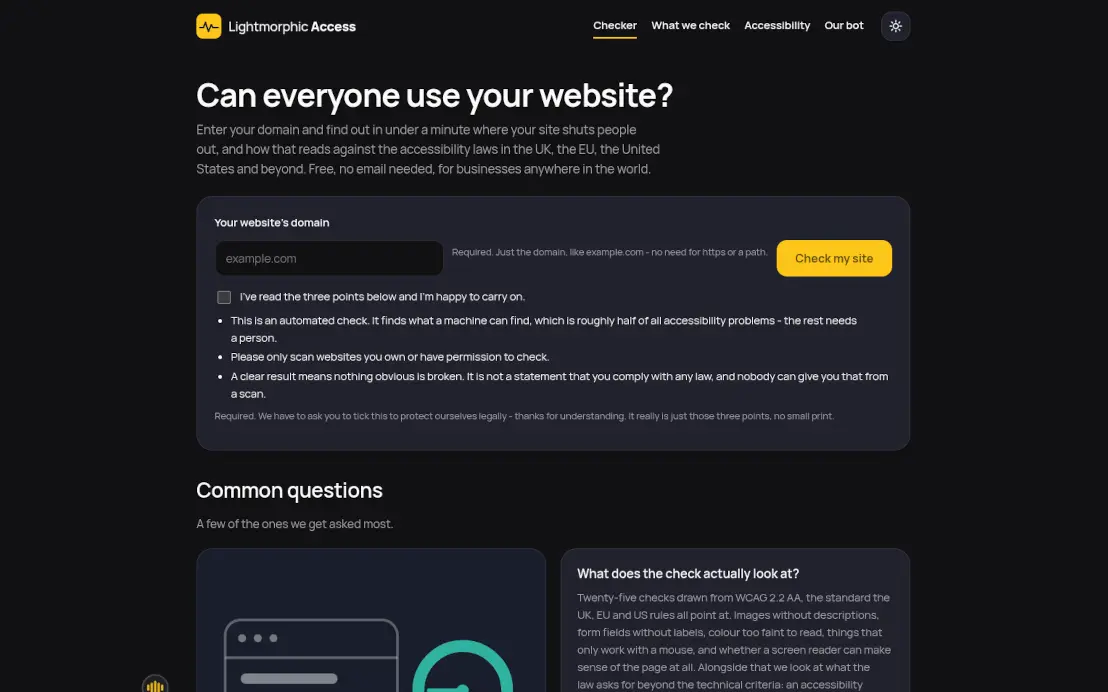 Lightmorphic AccessFree accessibility checker.
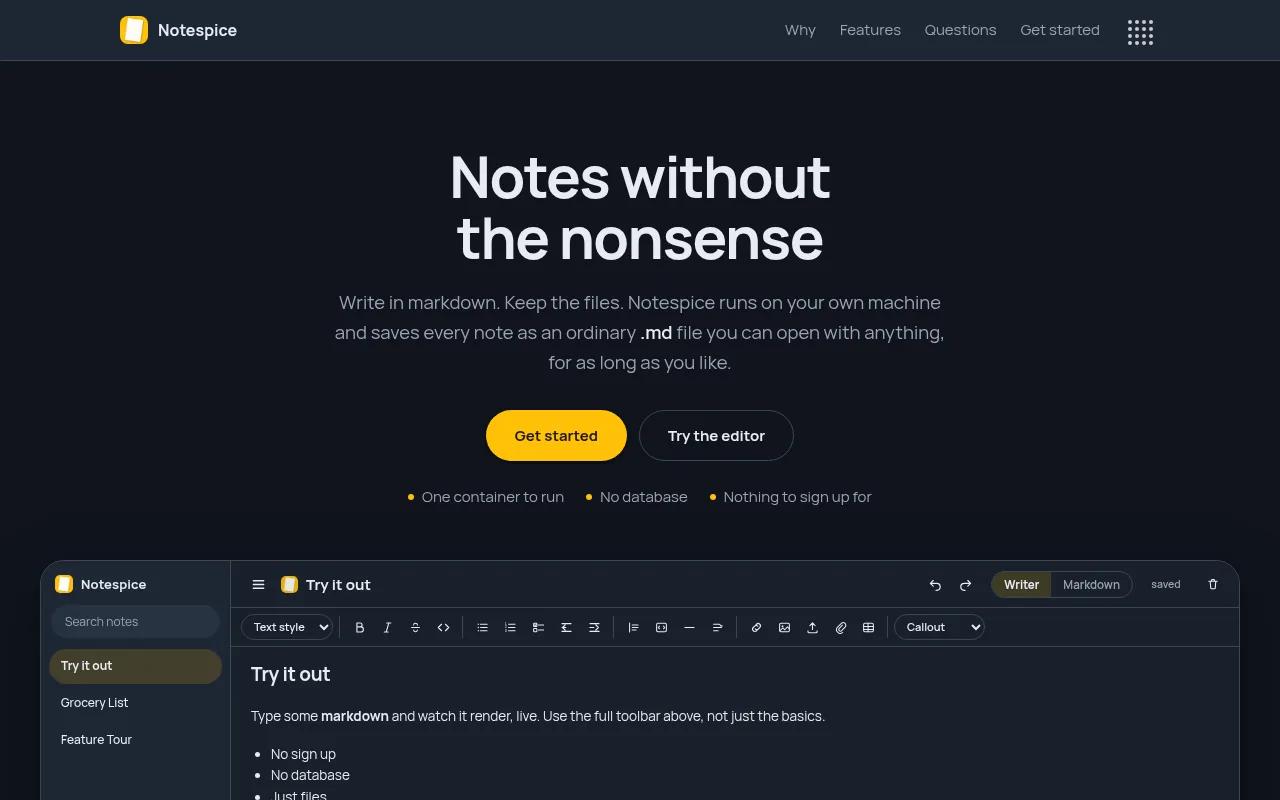 NotespiceSelf-hosted notes as plain files.
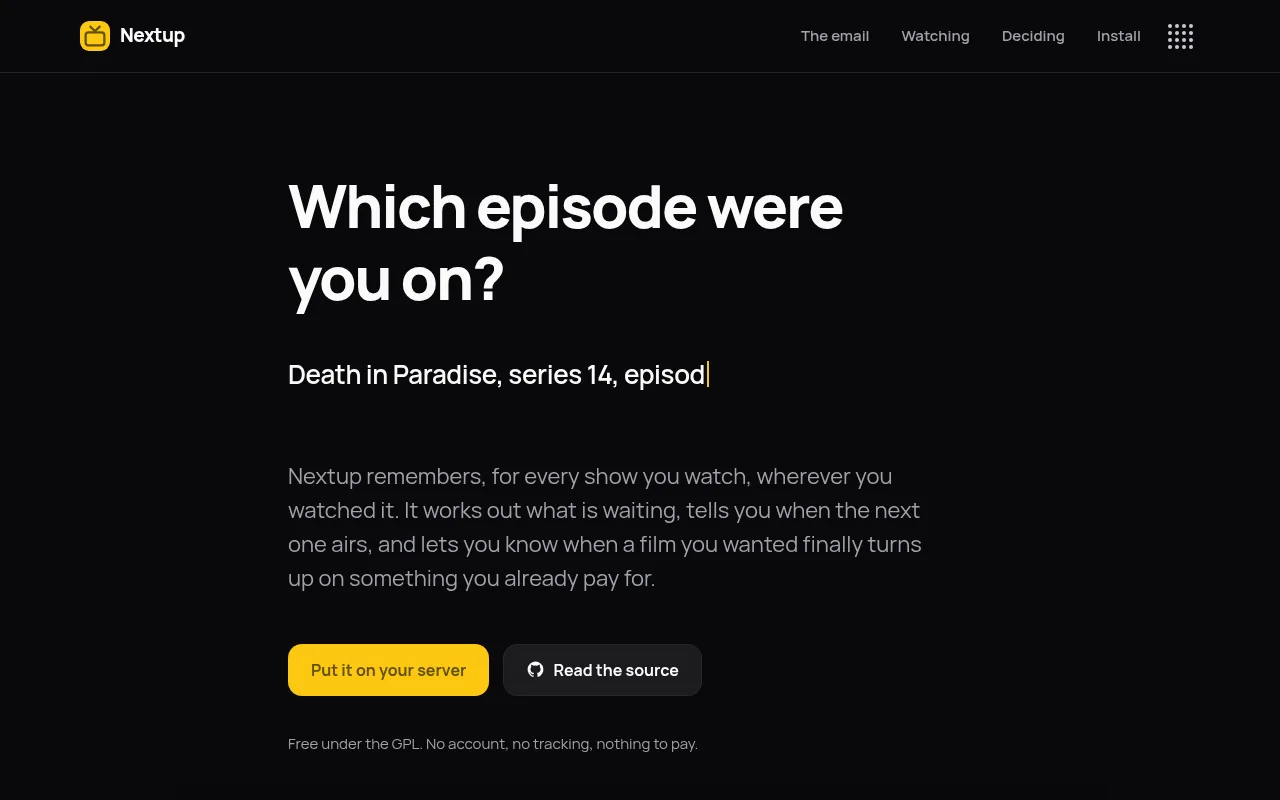 NextupRemembers which episode you are on.
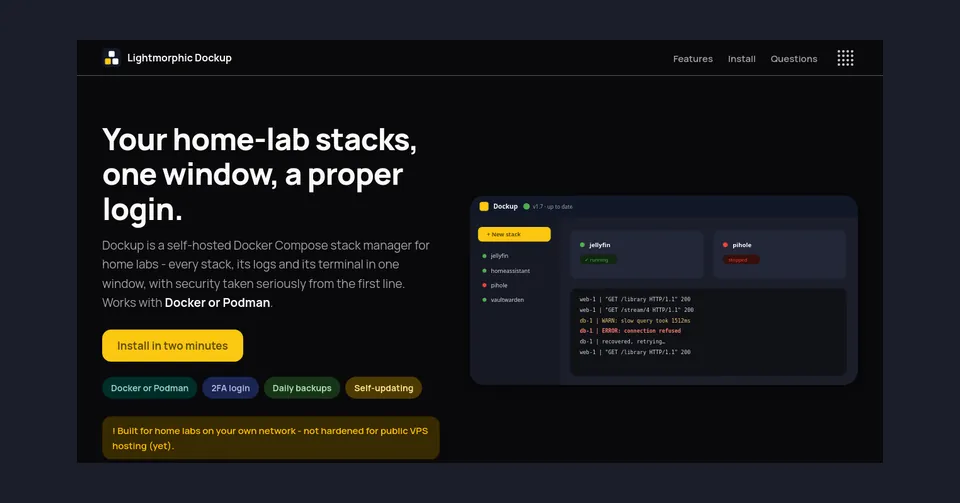 Lightmorphic DockupDocker Compose manager for home labs.
 Lightmorphic PasteBrowser extension for lines you paste often.
Secure and very fast, and hosted by us.
We build both, on a base already written and tested.
Built around your business today, and changed as your business changes. A fixed quote in writing, with a completion date.
What we buildHosting, contact form and live chat included. Your site needs no cookie banner, because it sets no cookies.
What comes with oneAsking AI for an app is the easy part. Knowing what it got wrong is the job.
The repetitive part takes minutes of machine time, not weeks.
Every change goes through 42 separate checks before it ships. Every finding is fixed, even the ones that look minor, because a few minor faults put together can make a serious one.
If we misjudge how long it takes, that is our problem, not yours.
In your own words. No specification needed.
Fixed, with a completion date, in writing.
Log in early and say what is wrong.
Online software, ready to use. Your data stays yours.
Twenty-five answers in five topics, in plain words.
AI drafts, a separate review decides
A person decides what is built. Every change is independently reviewed and tested before it ships.
Yes, in full
We do not hand it over and say goodbye. We keep it running, safe and secure, with updates and fixes, as part of an annual maintenance subscription. Your data is always yours.
Written down, with a completion date
The quote is agreed before work starts. It changes only if you ask for something that was not in your description, and we tell you first.
You take your data
All exportable, and no notice period.
11,000+ in one year
New WordPress vulnerabilities were catalogued in a single year, which is why it needs constant updating. Our sites are built to be secure and very fast, without that upkeep.
Global, and it makes no difference
Registered in England and Wales, with everything done remotely. Where you are makes no difference to how quickly we answer.
No specification needed, and usually an answer back the same week.
Tell us what you needWhen somebody asks an assistant "how much is a cut and colour in Stamford", the assistant does not want to read an essay. It wants a page that says, near the top, what the service is, where, and roughly what it costs. So does the customer. The two audiences want the same thing, which makes the job easier than it sounds: write for the person and the assistant follows.
This post is about the shape of a services page. Not the design, not the colours, just the order of the words and the facts they carry. A page with the right shape answers a question before the reader has scrolled.
An assistant weighs the opening of a page heavily, and so does a person deciding whether to keep reading. The first sentence should state the service, the place and, if you can, the price or a starting price. Everything else on the page supports that one line.
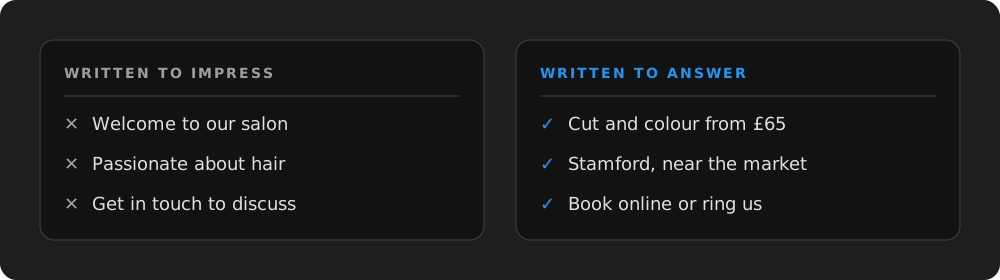
The left column is not wrong, exactly. It is just empty. Nothing in it answers a question. The right column answers three before the reader has drawn breath. When you look at your own pages, try covering everything below the first sentence and asking whether a stranger could quote what you do from that line alone.
Small firms often put every service on one long page because it feels tidy. The trouble is that a page about six things is about nothing in particular. An assistant looking for an answer about boiler servicing finds a page whose title says "Our Services" and whose text mentions boilers somewhere in the middle. A separate page called "Boiler servicing in Grantham" is a far better match, and it is a better page for a person too.
Five or six of these pages will do more for most businesses than fifty pages of anything else. If a service is small and you cannot write a hundred honest words about it, it probably belongs as a line on a bigger page rather than a page of its own.
There is a short list of facts that assistants and customers ask for over and over. Every service page should carry the ones that apply, written as ordinary text on the page rather than tucked into a picture or a downloadable leaflet.
| Fact | Weak version | Strong version |
|---|---|---|
| Price | Competitive rates | From £65, full price list below |
| Place | Serving the local area | Stamford and villages within ten miles |
| Hours | Flexible appointments | Tuesday to Saturday, 9 to 5.30, late night Thursday |
| Time | Quick turnaround | Most services take under two hours |
| Who | Experienced professionals | Two stylists, trained in colour correction |
The strong versions are all things you already know. They cost nothing to write down. The reason so many sites carry the weak versions is that somebody once worried that a price might put people off, or that naming a town might lose customers from the next one. In our experience the opposite happens: people ring the firm that told them the price, and assistants name the firm that told them the town.
Write the fact you would say on the phone, and say it once, near the top.
Not every job has a fixed price, and nobody expects a builder to quote an extension from a web page. But "from" prices, typical ranges and worked examples all count as answers. "A single-storey rear extension usually comes to between £30,000 and £50,000 depending on size and finish" is a real answer that a customer can plan around and an assistant can repeat. "Every job is different, contact us for a quote" is not.
If prices change with the seasons or the supplier, say so and give today's figure. A price with a date on it is more trustworthy than no price at all, and it is easy to update if the page is yours to edit.
Hours and place deserve the same treatment. Write the hours as a short line of text near the top of every service page, not only on the contact page, because a visitor who lands on the boiler page from an assistant may never see the contact page at all. Name the town in the first sentence and list the villages or districts you cover further down. A postcode district such as PE9 is worth adding too, because that is often how a question is phrased.
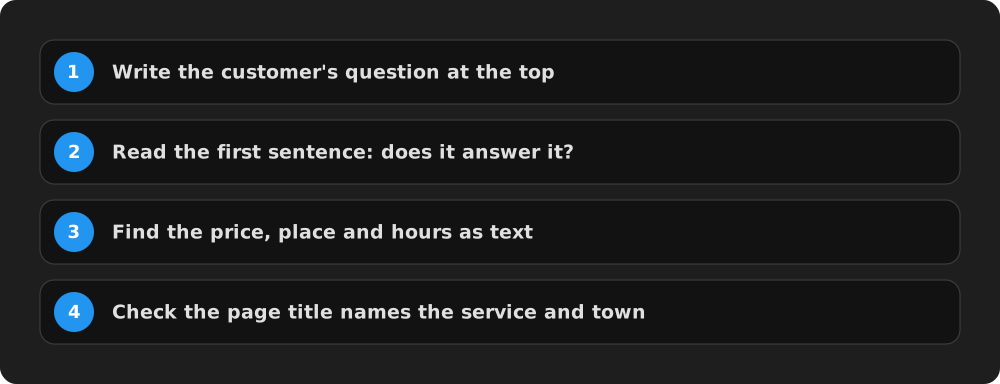
A quick test before you publish: write the question a customer would ask, then read the page and see how far down you get before it is answered. If the answer is in the first two sentences, the page is doing its job. If it is in the fourth paragraph, move it. If it is nowhere, that is the page's real problem, and no amount of design will fix it.
Do this for each service in turn and you will end up with a set of pages that a stranger can understand, an assistant can quote, and you can be proud of. We lay out every page on a Sitemorphic site this way, but the shape belongs to nobody. It is just what a good answer looks like, and it has looked like that for as long as people have asked questions.