


Software
Who actually writes it?
AI drafts, a separate review decides
A person decides what is built. Every change is independently reviewed and tested before it ships.
Anyone can ask AI for an app. Making one that is safe, that fits your business and that grows with it takes specialists. We are the AI specialists, for businesses anywhere in the world.
Turn it into a
Every business has a spreadsheet like this one. Press a button to see what replaces it.
| A | B | C | D | E |
|---|---|---|---|---|
| Mrs Okafor | 09:00 | Cut+colour | 65 | paid |
| D. Whitlow | 10:30 | Trim | 18 | ?? |
| same lady | 12:00 | colour | 65 | cash? |
| Priya (resc) | 2pm | Cut | 22 | paid |
| 15:15 | Beard | 12 | unpaid | |
| J Mensah | 16:00 | Cut+beard | 30 | paid |
Today
Tuesday, 6 jobsOutstanding
3 overdueBelow minimum
reorder before FridayBuilt by the same people with the same tools. Most are free, so try one now.
 Lightmorphic VitalsFree website health and AI check.
 Lightmorphic AccessFree accessibility checker.
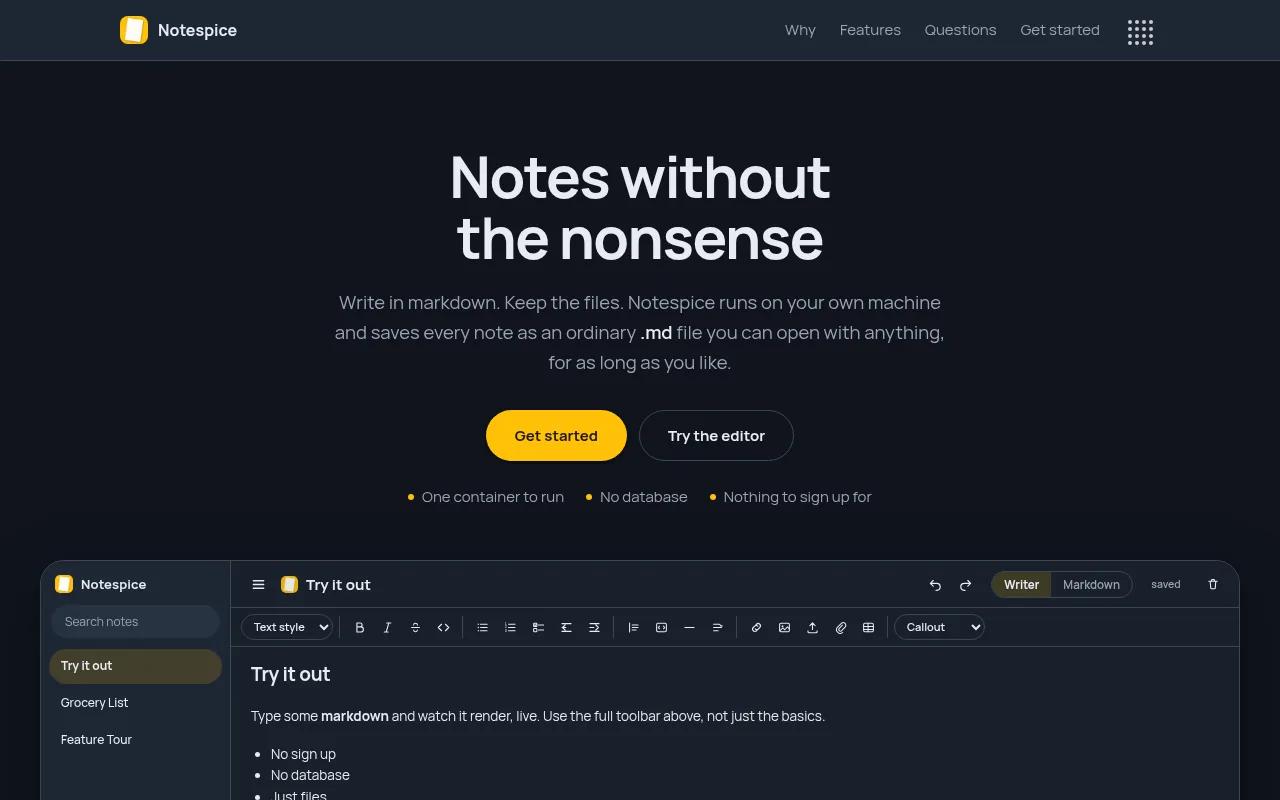 NotespiceSelf-hosted notes as plain files.
 NextupRemembers which episode you are on.
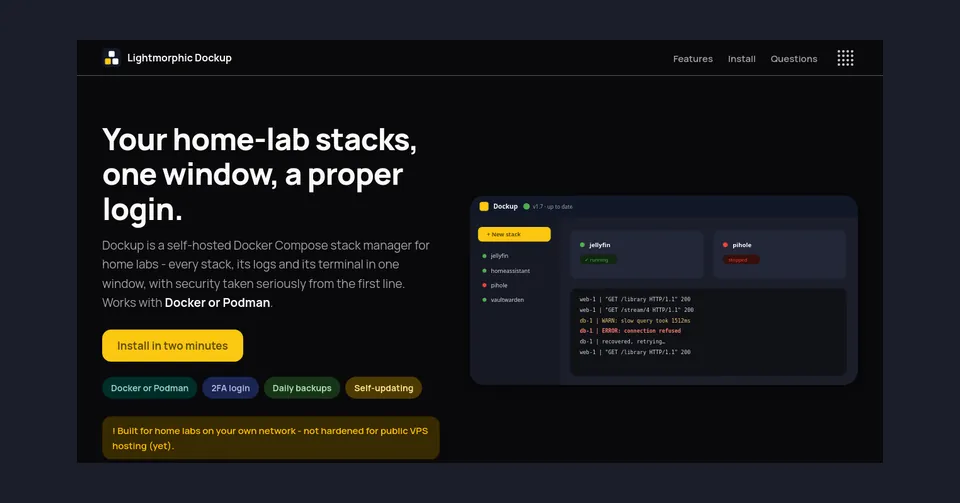 Lightmorphic DockupDocker Compose manager for home labs.
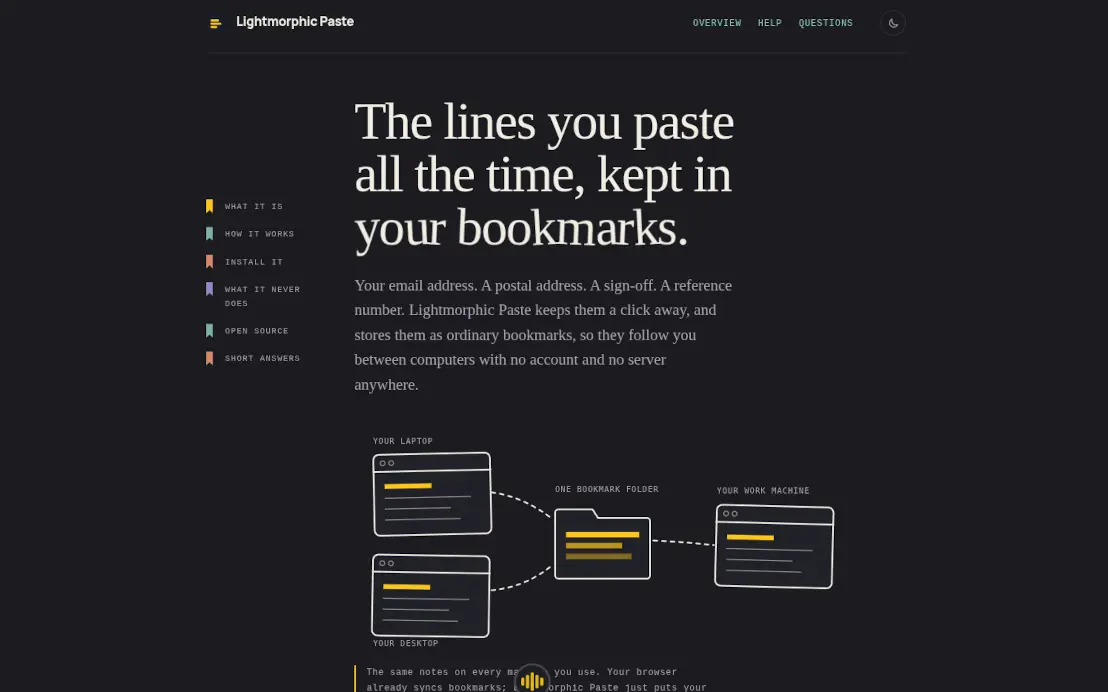 Lightmorphic PasteBrowser extension for lines you paste often.
Secure and very fast, and hosted by us.
We build both, on a base already written and tested.
Built around your business today, and changed as your business changes. A fixed quote in writing, with a completion date.
What we buildHosting, contact form and live chat included. Your site needs no cookie banner, because it sets no cookies.
What comes with oneAsking AI for an app is the easy part. Knowing what it got wrong is the job.
The repetitive part takes minutes of machine time, not weeks.
Every change goes through 42 separate checks before it ships. Every finding is fixed, even the ones that look minor, because a few minor faults put together can make a serious one.
If we misjudge how long it takes, that is our problem, not yours.
In your own words. No specification needed.
Fixed, with a completion date, in writing.
Log in early and say what is wrong.
Online software, ready to use. Your data stays yours.
Twenty-five answers in five topics, in plain words.
AI drafts, a separate review decides
A person decides what is built. Every change is independently reviewed and tested before it ships.
Yes, in full
We do not hand it over and say goodbye. We keep it running, safe and secure, with updates and fixes, as part of an annual maintenance subscription. Your data is always yours.
Written down, with a completion date
The quote is agreed before work starts. It changes only if you ask for something that was not in your description, and we tell you first.
You take your data
All exportable, and no notice period.
11,000+ in one year
New WordPress vulnerabilities were catalogued in a single year, which is why it needs constant updating. Our sites are built to be secure and very fast, without that upkeep.
Global, and it makes no difference
Registered in England and Wales, with everything done remotely. Where you are makes no difference to how quickly we answer.
No specification needed, and usually an answer back the same week.
Tell us what you needIt is the quiet part of summer. The phone rings a little less, the inbox is calmer, and a lot of the people who would normally be looking you up are on a beach somewhere. That makes it a good moment to look at something most small business owners never get round to: how fast the website actually is.
Speed is not a nice-to-have. A slow page loses people before they read a word, and Google has said for years that it uses speed when deciding who ranks. The AI assistants that now answer questions on people's phones fetch pages too, and they are just as impatient. If the page takes too long, they move on to the next one. The good news is that the whole subject boils down to three measures, and you can check all of them for nothing.
Google calls them Core Web Vitals and gives each one a set of initials. You do not need the initials. You need to know what each one is asking.
That is the whole list. Fast to appear, quick to respond, holds still. If a site does those three things it passes, and if it does not, you will feel it as a visitor even if you cannot name the problem.

In our experience, when a small business site is slow, the pictures are the reason nine times out of ten. Somebody took a lovely photo of the shop front on a modern phone, and that photo is four or five thousand pixels wide and several megabytes in size. The web page shows it at a few hundred pixels wide. The visitor's phone still has to download the whole thing over a mobile signal before it can shrink it down.
Multiply that by a hero photo, a gallery of six and a team picture, and the page is downloading more than a short video before it can show anything. The fix is not complicated. Every image should be saved at the size it is actually shown, in a modern format that compresses well, and the ones further down the page should only load when the visitor scrolls to them. A well-built site does this automatically. An older one, or one built in a page builder with the defaults left alone, usually does not.
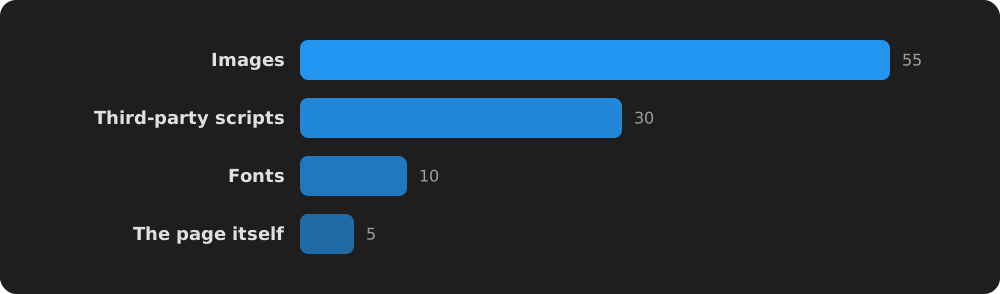
The other big one is everything your site loads from somewhere else. A chat widget from one company. An analytics tag from another. A map embed, a social media feed, a review carousel, a cookie banner, a font served from a third party, a booking button. Each of those is a separate trip to a separate server, and each one runs its own code on the visitor's phone before the page settles down.
This is the thing that makes a page slow to respond to a tap, and it is often what makes the layout jump, because the outside code arrives late and pushes everything around. It is also why we build our clients' sites to load nothing from third parties at all. No cookies, no outside scripts, no tags. The page is just the page. It is faster, it is more private, and there is nothing to break when somebody else's service has a bad day.
Every script you borrow from somebody else is a stranger you have invited to slow your visitors down.
You do not need a developer to find out where you stand. Google gives away a tool called PageSpeed Insights. You type in your web address and it gives you a score for mobile and for desktop, shows the three measures, and lists what it thinks is slowing you down. It is free and it takes about a minute.
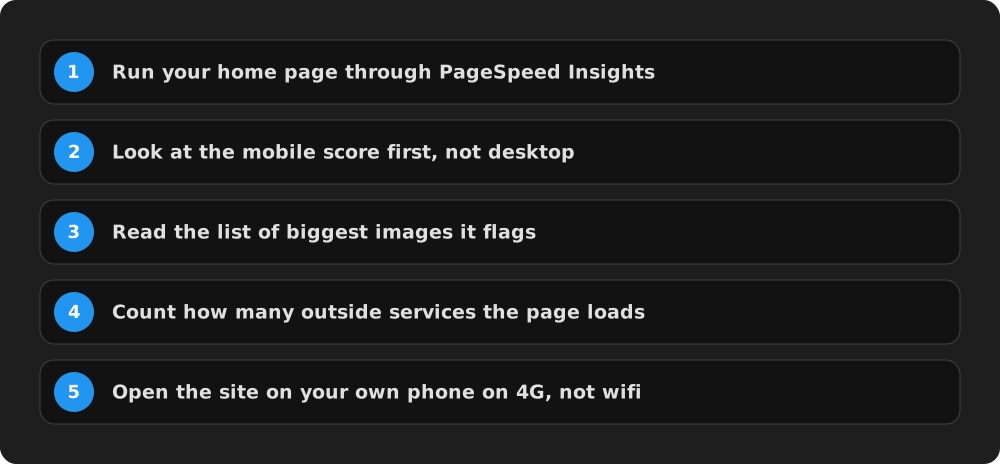
A few things to keep in mind when you read the result:
The last check is the one that matters most. Open your own site on your own phone, with wifi turned off, standing somewhere ordinary like the car park. Count in your head. If you are still looking at a blank screen at three, so is everyone else.
If the images are the problem, the fix is to resize and compress them. On a site you look after yourself, replace the biggest offenders first. On a site somebody looks after for you, send them the PageSpeed report and ask them to sort the images and lazy-load the ones below the fold. It is a routine job and should not cost much.
If outside scripts are the problem, make a list of every service the page loads and ask whether each one earns its place. In our experience most small firms find two or three they had forgotten about entirely. Remove those. For the ones you keep, ask whether there is a way to have them not load until the visitor actually needs them.
Speed is one of those things where the effort is front-loaded. Get the images right and the outside code out once, and the site stays fast for years. It is a good job for a quiet week in July, and your visitors in September, when everything picks up again, will never know how much faster you made it. They will just find you, and stay.