
Software
Who actually writes it?
AI drafts, a separate review decides
A person decides what is built. Every change is independently reviewed and tested before it ships.
Anyone can ask AI for an app. Making one that is safe, that fits your business and that grows with it takes specialists. We are the AI specialists, for businesses anywhere in the world.
Turn it into a
Every business has a spreadsheet like this one. Press a button to see what replaces it.
| A | B | C | D | E |
|---|---|---|---|---|
| Mrs Okafor | 09:00 | Cut+colour | 65 | paid |
| D. Whitlow | 10:30 | Trim | 18 | ?? |
| same lady | 12:00 | colour | 65 | cash? |
| Priya (resc) | 2pm | Cut | 22 | paid |
| 15:15 | Beard | 12 | unpaid | |
| J Mensah | 16:00 | Cut+beard | 30 | paid |
Today
Tuesday, 6 jobsOutstanding
3 overdueBelow minimum
reorder before FridayBuilt by the same people with the same tools. Most are free, so try one now.
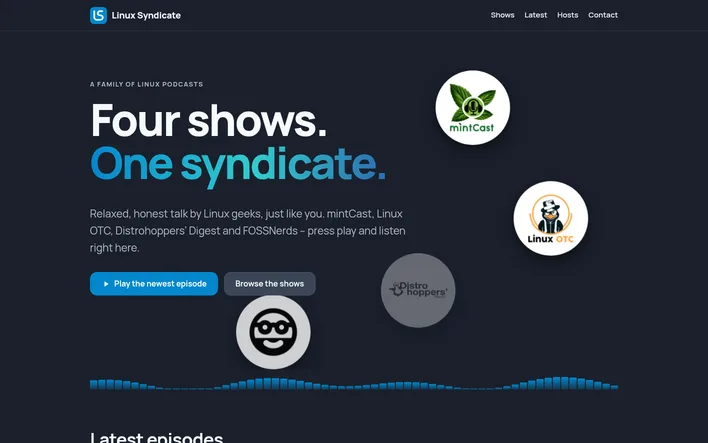
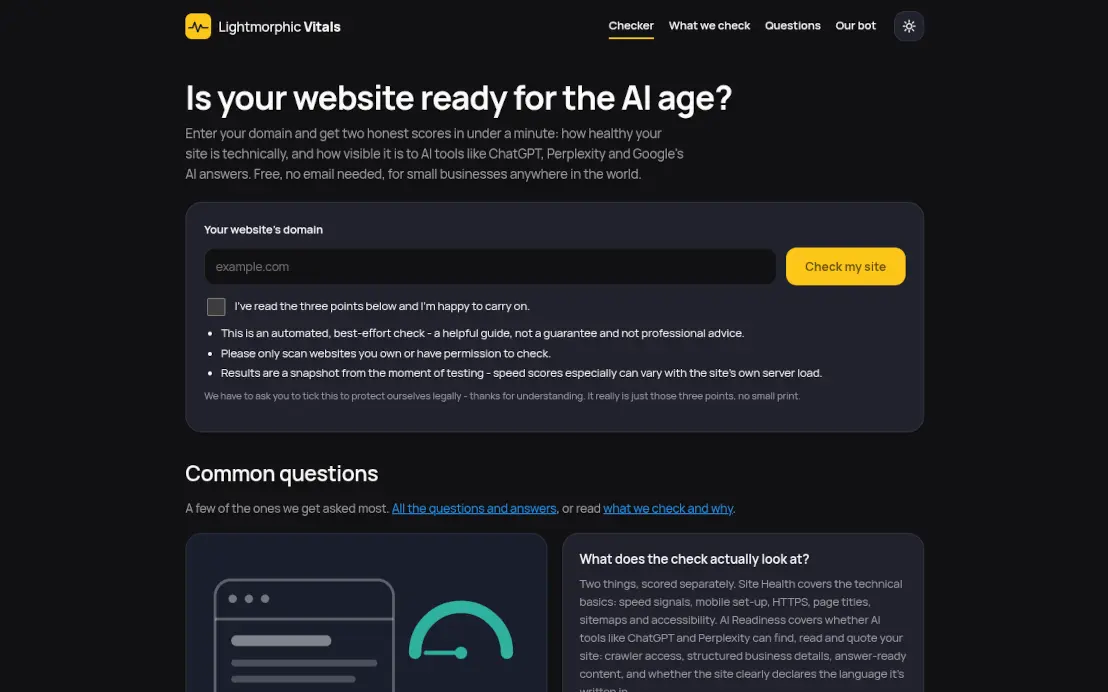 Lightmorphic VitalsFree website health and AI check.
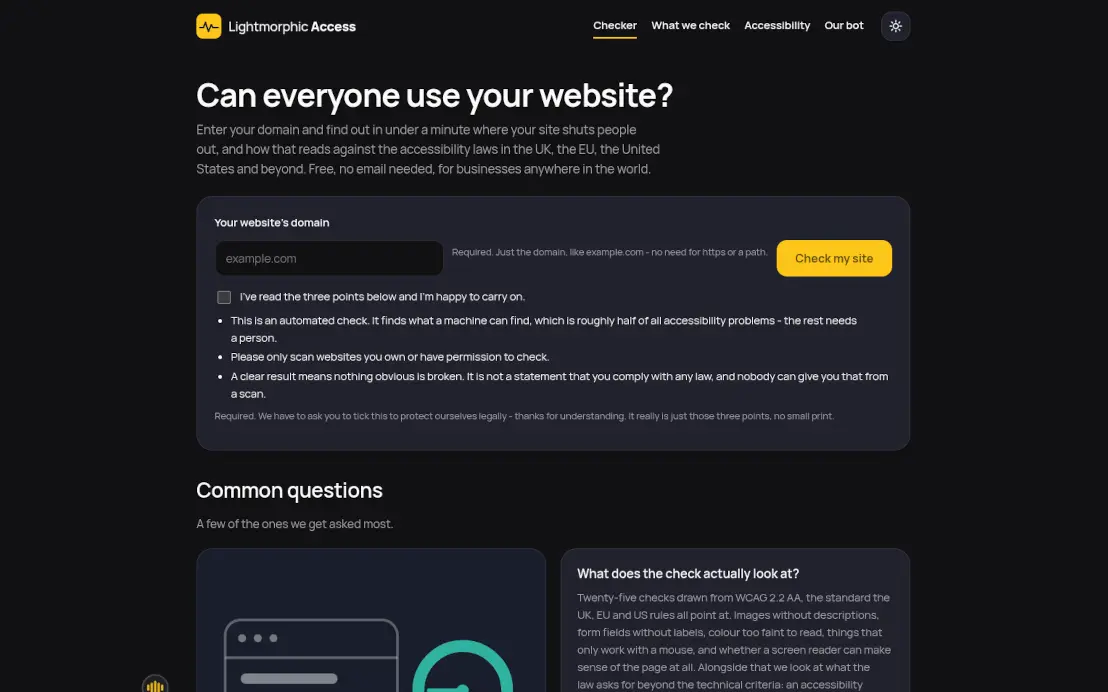 Lightmorphic AccessFree accessibility checker.
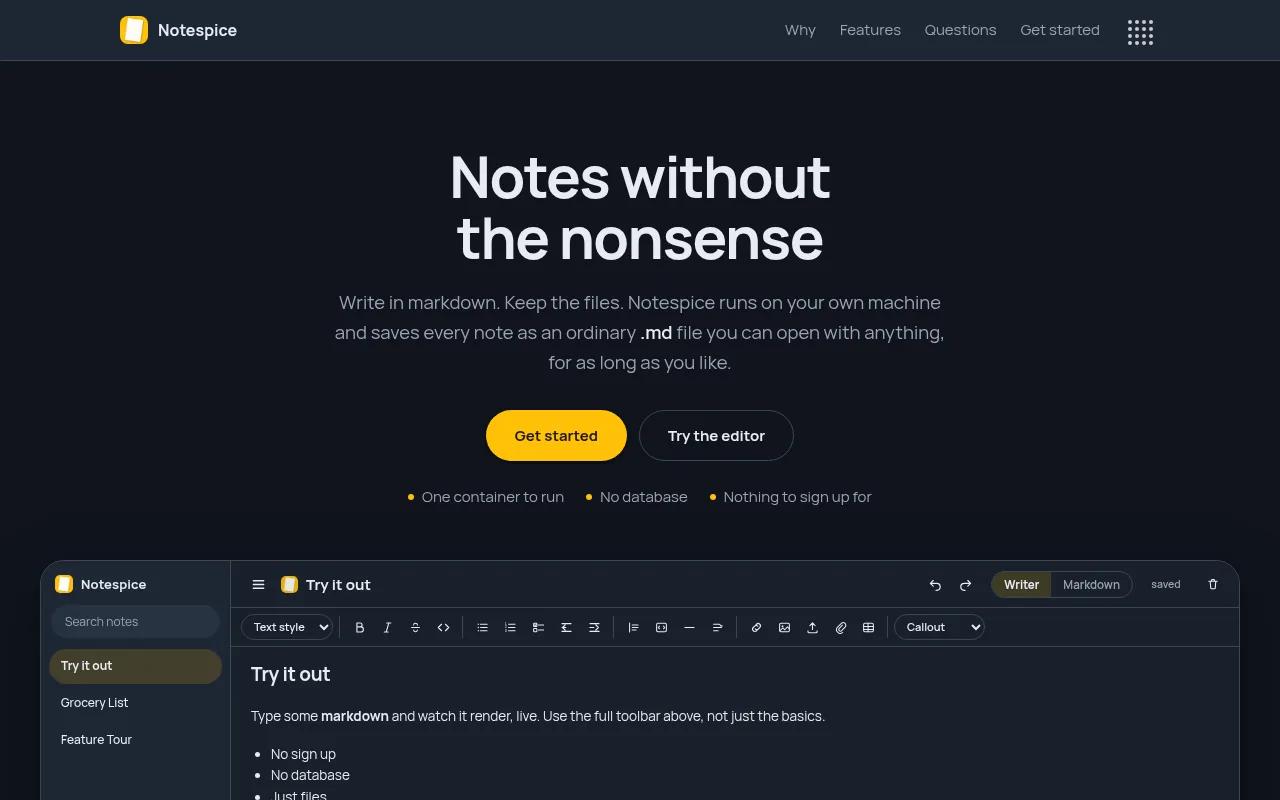 NotespiceSelf-hosted notes as plain files.
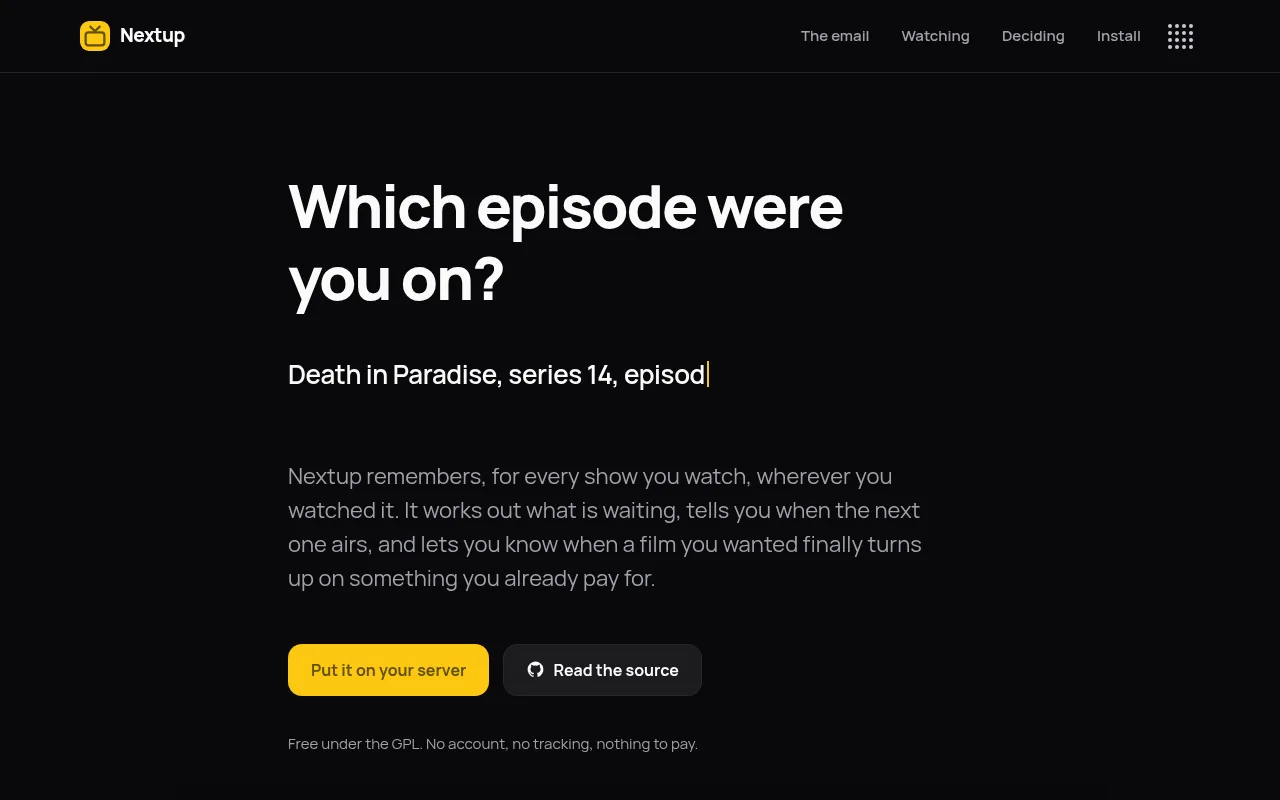 NextupRemembers which episode you are on.
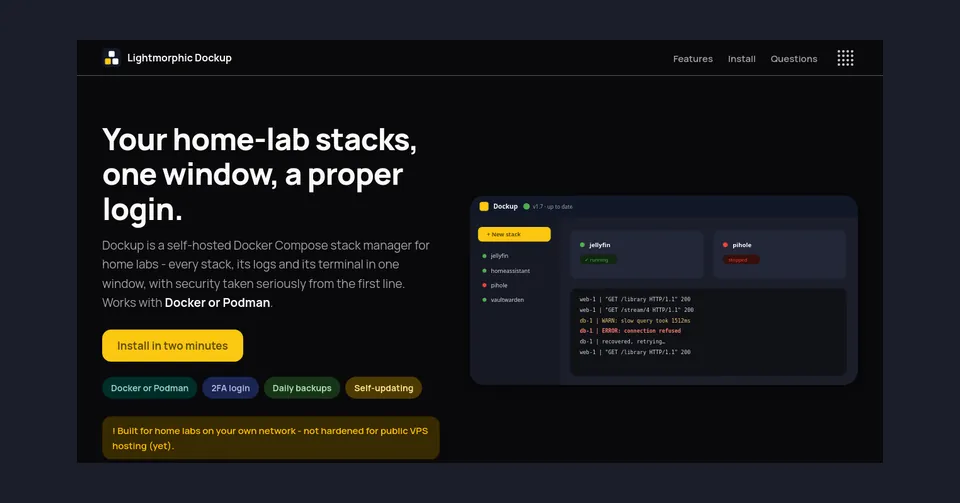 Lightmorphic DockupDocker Compose manager for home labs.
 Lightmorphic PasteBrowser extension for lines you paste often.
Secure and very fast, and hosted by us.
We build both, on a base already written and tested.
Built around your business today, and changed as your business changes. A fixed quote in writing, with a completion date.
What we buildHosting, contact form and live chat included. Your site needs no cookie banner, because it sets no cookies.
What comes with oneAsking AI for an app is the easy part. Knowing what it got wrong is the job.
The repetitive part takes minutes of machine time, not weeks.
Every change goes through 42 separate checks before it ships. Every finding is fixed, even the ones that look minor, because a few minor faults put together can make a serious one.
If we misjudge how long it takes, that is our problem, not yours.
In your own words. No specification needed.
Fixed, with a completion date, in writing.
Log in early and say what is wrong.
Online software, ready to use. Your data stays yours.
Twenty-five answers in five topics, in plain words.
AI drafts, a separate review decides
A person decides what is built. Every change is independently reviewed and tested before it ships.
Yes, in full
We do not hand it over and say goodbye. We keep it running, safe and secure, with updates and fixes, as part of an annual maintenance subscription. Your data is always yours.
Written down, with a completion date
The quote is agreed before work starts. It changes only if you ask for something that was not in your description, and we tell you first.
You take your data
All exportable, and no notice period.
11,000+ in one year
New WordPress vulnerabilities were catalogued in a single year, which is why it needs constant updating. Our sites are built to be secure and very fast, without that upkeep.
Global, and it makes no difference
Registered in England and Wales, with everything done remotely. Where you are makes no difference to how quickly we answer.
No specification needed, and usually an answer back the same week.
Tell us what you needPick up your phone after dark and the screen is probably already black with white writing. Pick it up at lunchtime in the garden and it is probably white with black. You did not do anything. The phone decided, based on the time of day or the light around you, and every app on it followed suit. So did the web browser. So, if it was built properly, did your website. And if it was not, something on it is now hard to read or looks broken, and you may never have noticed because you only ever look at it in the office.
This post is about what dark mode is doing to small business websites, what actually goes wrong, and how a site can follow the visitor's setting without anyone having to build and maintain two versions of it.
A few years ago dark mode was a setting a few people turned on because they liked it. Now the default on most phones is "automatic": light in the day, dark at night, or dark whenever the ambient light is low. A large share of visitors never chose either; the phone chose for them. On top of that, a lot of people, particularly those with tired eyes or who read in bed, leave it on dark permanently.
The practical result is that you can no longer know which version of your site a visitor is seeing. The person reading your menu at eight in the evening is almost certainly seeing it in dark mode. The one checking your opening hours at nine in the morning is probably seeing it in light. Both of them need to be able to read it.
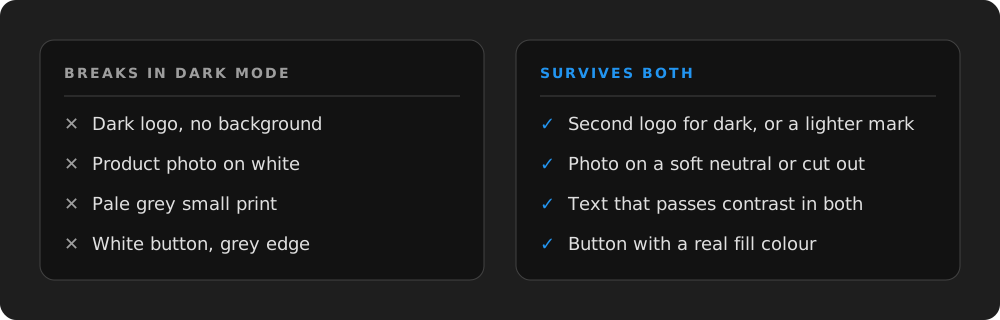
A website tells the browser what colour each thing is. If it says nothing about dark mode, the browser has two choices. It can leave the site exactly as designed, so it glows bright white in a dark room and looks out of place next to every other app. Or, on some phones, it can try to darken the site itself by flipping colours, which is where things go properly wrong. In our experience the same handful of problems turn up every time.
None of this stops the site working. All of it makes the business look careless, and the pale grey text problem can genuinely stop somebody reading your phone number.
The fear people have is that supporting both means building the site twice. It does not. Every modern browser can tell the site "this visitor prefers dark" or "this visitor prefers light", and the site can answer with one set of colours or the other. The layout, the words, the pictures, the pages are all the same. Only the colours change, and they change in one place.
The trick that makes this cheap is to never write colours directly into the design. Instead the site has a short list of named colours: the background, the main text, the muted text, the accent, the line colour. Everything on the site points at one of those names. Then there are two versions of the list, one for light and one for dark, and the browser picks whichever the visitor asked for. Change the accent in the list and every button on the site changes with it. That is the whole method.

A few practical points that come out of doing this for a lot of sites:
The reason dark mode problems go unnoticed for months is that the person who looks after the site checks it in the mode they happen to use. So the check has to be deliberate. Whenever a page changes, whoever changed it should look at it in both, on a phone, not just a desktop screen.
On most phones you can flip the whole device between light and dark in the quick settings in two taps. Do that with your site open and just scroll. You are looking for anything that disappears, anything that turns into a bright block, and any text you have to squint at. Then look at the same page the other way round. Ten minutes, both modes, every time a page is edited, and the problem never builds up.
If you only ever look at your site in daylight, half your visitors are seeing something you have never checked.
We build every client site this way, with one named colour list and a light and dark version of it, and we look at both before anything goes live. It does not cost more to do from the start. What costs is retrofitting it into a site that had white written into every corner. If your site was built more than a few years ago, or was put together in a page builder with the defaults left alone, it is worth turning your phone dark this evening and having a look. You might be pleasantly surprised. Or you might find your logo has been missing since last winter.