Software
Who actually writes it?
AI drafts, a separate review decides
A person decides what is built. Every change is independently reviewed and tested before it ships.
Anyone can ask AI for an app. Making one that is safe, that fits your business and that grows with it takes specialists. We are the AI specialists, for businesses anywhere in the world.
Turn it into a
Every business has a spreadsheet like this one. Press a button to see what replaces it.
| A | B | C | D | E |
|---|---|---|---|---|
| Mrs Okafor | 09:00 | Cut+colour | 65 | paid |
| D. Whitlow | 10:30 | Trim | 18 | ?? |
| same lady | 12:00 | colour | 65 | cash? |
| Priya (resc) | 2pm | Cut | 22 | paid |
| 15:15 | Beard | 12 | unpaid | |
| J Mensah | 16:00 | Cut+beard | 30 | paid |
Today
Tuesday, 6 jobsOutstanding
3 overdueBelow minimum
reorder before FridayBuilt by the same people with the same tools. Most are free, so try one now.
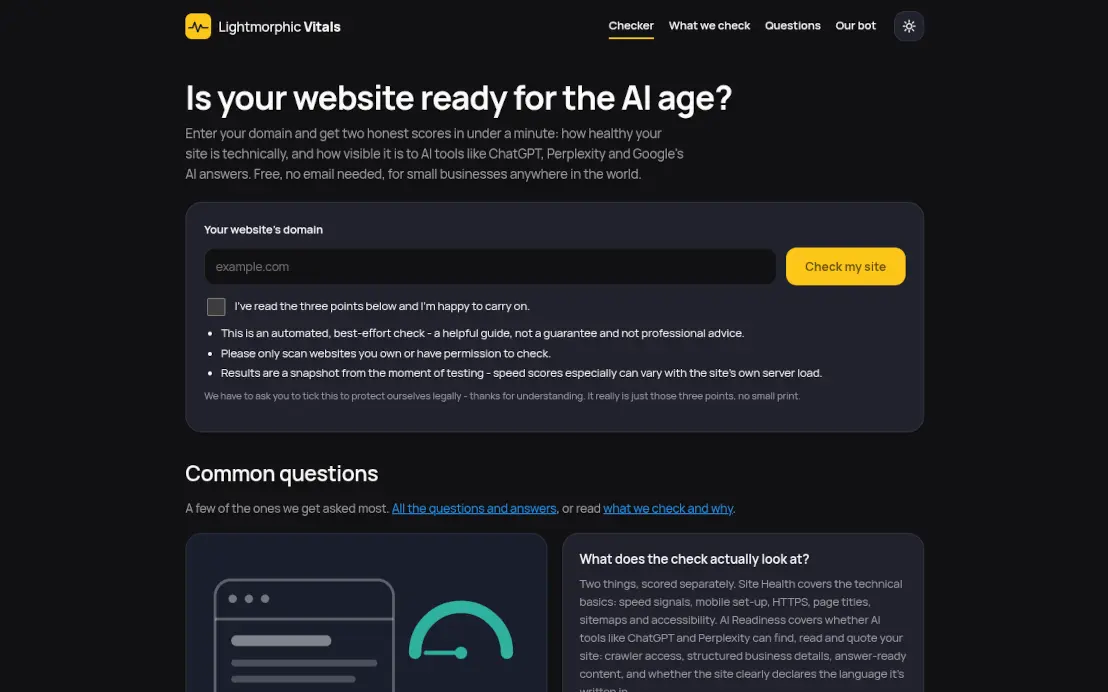 Lightmorphic VitalsFree website health and AI check.
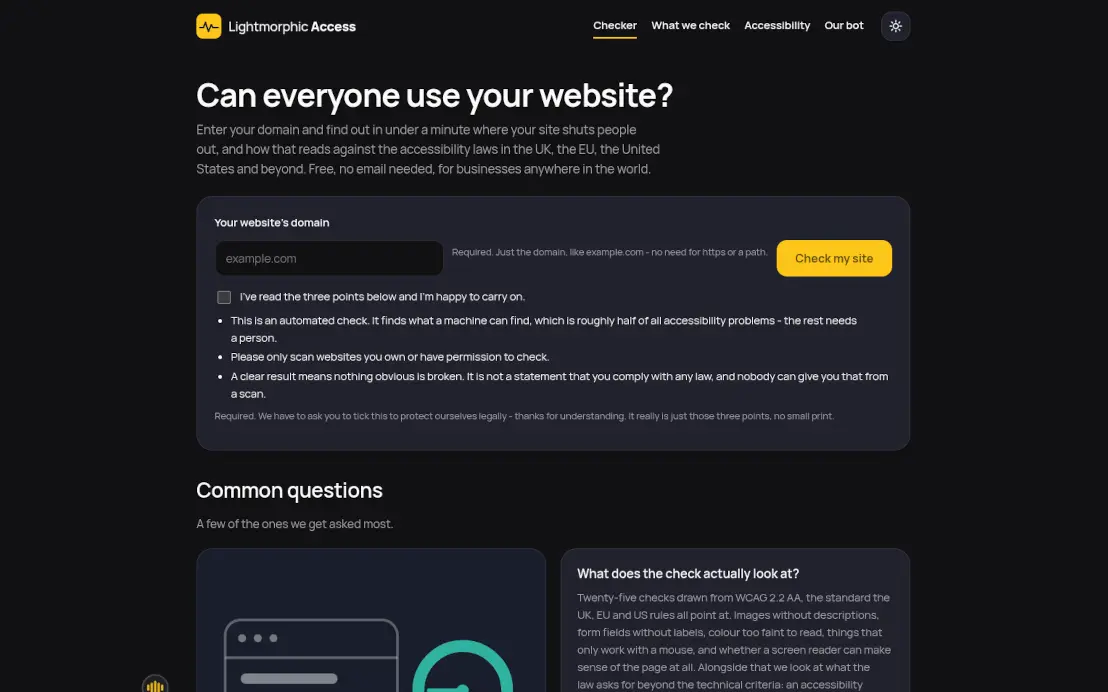 Lightmorphic AccessFree accessibility checker.
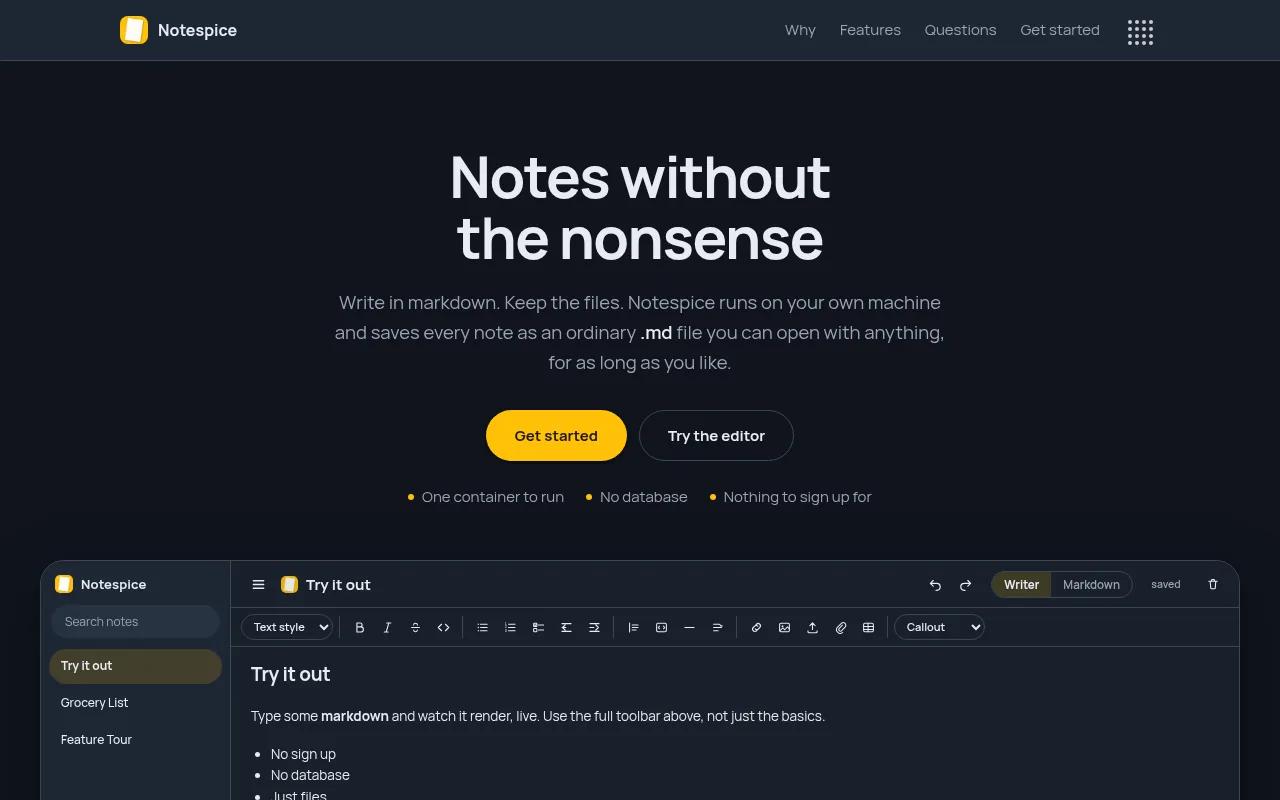 NotespiceSelf-hosted notes as plain files.
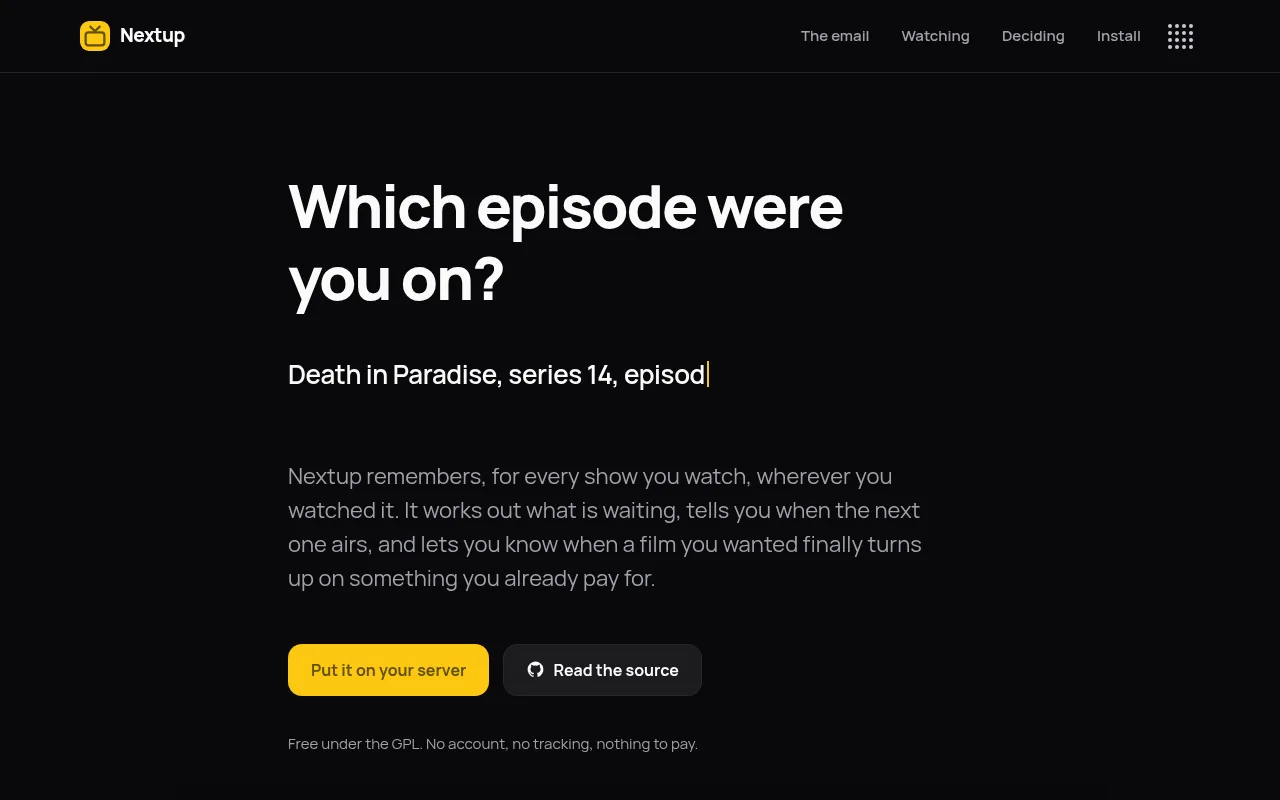 NextupRemembers which episode you are on.
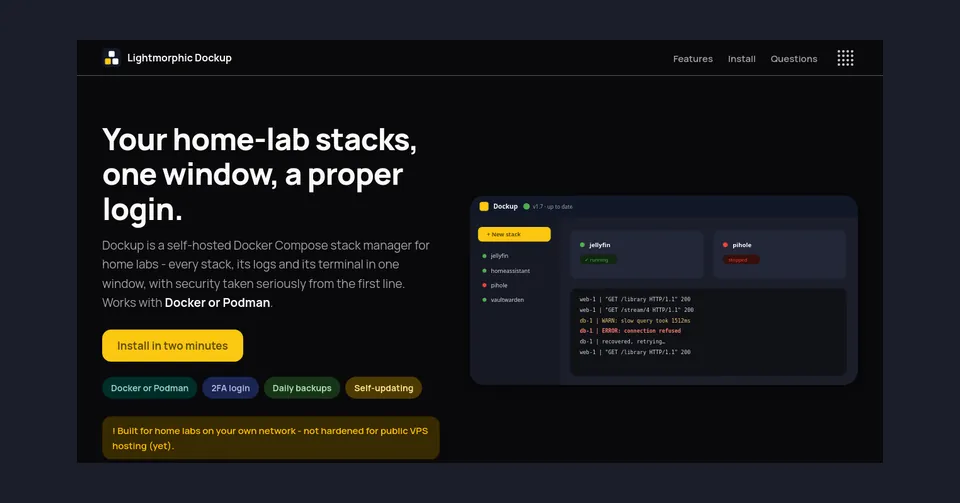 Lightmorphic DockupDocker Compose manager for home labs.
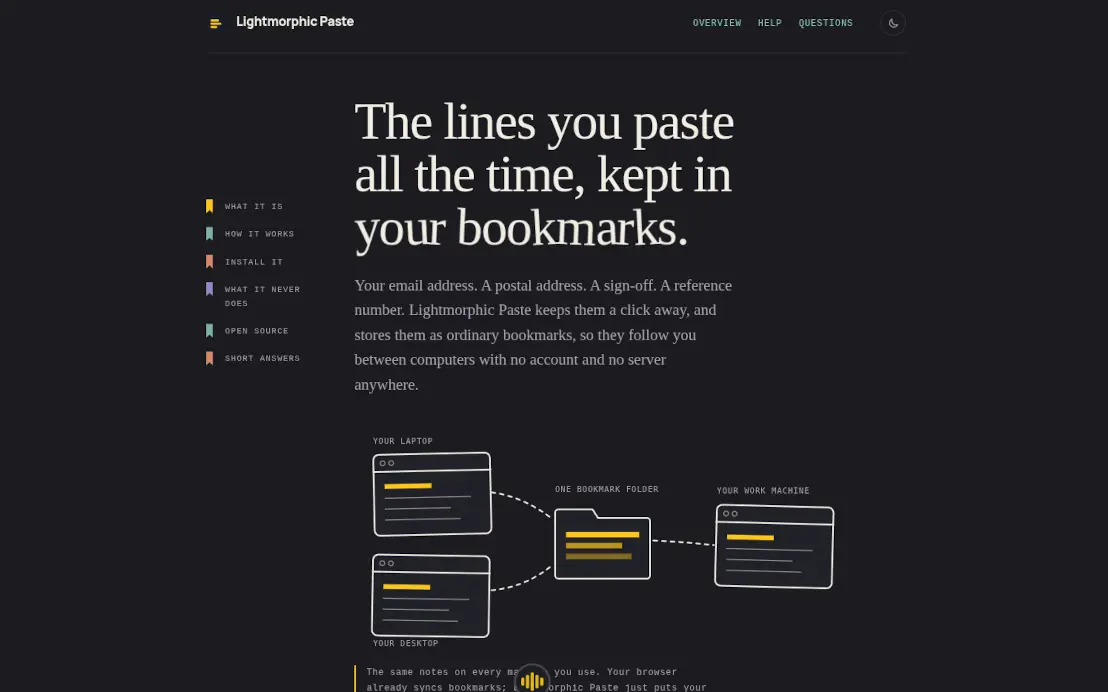 Lightmorphic PasteBrowser extension for lines you paste often.
Secure and very fast, and hosted by us.
We build both, on a base already written and tested.
Built around your business today, and changed as your business changes. A fixed quote in writing, with a completion date.
What we buildHosting, contact form and live chat included. Your site needs no cookie banner, because it sets no cookies.
What comes with oneAsking AI for an app is the easy part. Knowing what it got wrong is the job.
The repetitive part takes minutes of machine time, not weeks.
Every change goes through 42 separate checks before it ships. Every finding is fixed, even the ones that look minor, because a few minor faults put together can make a serious one.
If we misjudge how long it takes, that is our problem, not yours.
In your own words. No specification needed.
Fixed, with a completion date, in writing.
Log in early and say what is wrong.
Online software, ready to use. Your data stays yours.
Twenty-five answers in five topics, in plain words.
AI drafts, a separate review decides
A person decides what is built. Every change is independently reviewed and tested before it ships.
Yes, in full
We do not hand it over and say goodbye. We keep it running, safe and secure, with updates and fixes, as part of an annual maintenance subscription. Your data is always yours.
Written down, with a completion date
The quote is agreed before work starts. It changes only if you ask for something that was not in your description, and we tell you first.
You take your data
All exportable, and no notice period.
11,000+ in one year
New WordPress vulnerabilities were catalogued in a single year, which is why it needs constant updating. Our sites are built to be secure and very fast, without that upkeep.
Global, and it makes no difference
Registered in England and Wales, with everything done remotely. Where you are makes no difference to how quickly we answer.
No specification needed, and usually an answer back the same week.
Tell us what you needAlmost every website now greets you with a box asking you to accept cookies. It has become so normal that people assume it is required, as if a website without one were breaking the rules. It is not. The rules ask you to get permission before you store things on a visitor's device that you do not strictly need. If you store nothing, there is nothing to ask permission for, and the box can go.
A small business site, in most cases, needs no cookies at all. This post explains why the banners exist, what a site without them looks like, what you lose, what you gain, and the one thing you still need to keep.
A cookie is a small note a website leaves in your browser so it can recognise you next time. Some are useful and harmless: staying logged in, remembering what is in a basket. Others exist to track what you do across many sites so that advertising can follow you. Privacy rules in the UK and Europe say that the second kind, and most of the first kind that are not strictly necessary, need your agreement before they are set.
Most banners are there because the site loads things from other companies: an analytics script, an embedded map, a social media button, a chat widget, a font served from somebody else's servers. Each of those can leave its own notes and report back. The banner is the site's way of getting your permission for all of them at once, and the reason it looks the way it does is that whoever built the site did not know exactly what all those things were doing either.
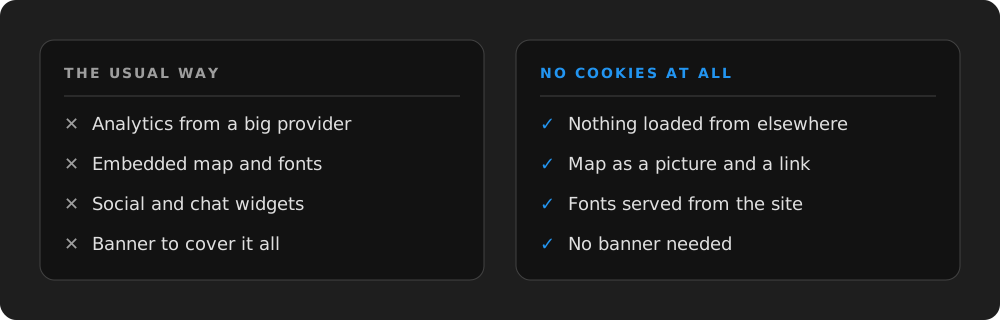
From the visitor's side it looks like a normal website that loads a little faster and does not interrupt them. From the inside, it is a site that keeps everything on its own server and sets nothing in the browser. Concretely, that means:
Once all of that is true, the banner has nothing to ask about. Remove it. The site is simpler, and so is the privacy page, because there is far less to explain.
Honestly, not much, but it is worth listing. You lose the detailed visitor charts that come with a big analytics tool: which page people looked at for how long, which town they were in, which advert brought them. For a firm running paid advertising at scale that may matter. For most small businesses, what matters is whether the phone rang, and a simple count of visits from the server logs is enough.
You also lose the live embedded map, which some people like, and the ability for a visitor to watch a video without leaving the page. Both are replaced by a picture and a link, which takes one extra tap. In our experience nobody notices.
And you lose the ability to show a visitor a different page based on what they did last time. Small business sites almost never do this anyway.
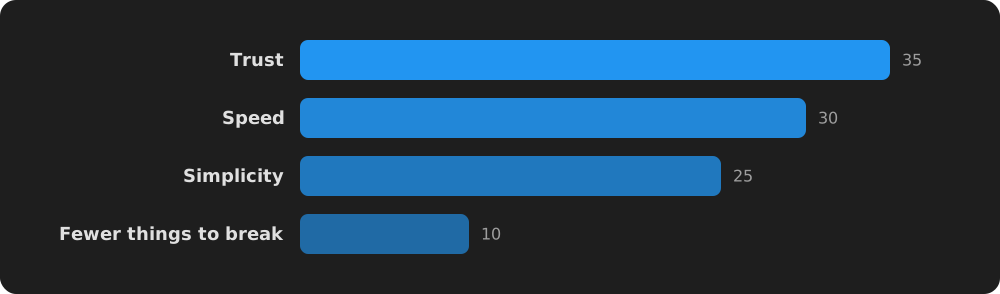
Trust. A site that does not ask to track you starts the relationship politely. People notice the absence of the box more than they would admit, especially on a phone where the banner can cover half the screen.
Speed. Third-party scripts are the second largest cause of slow pages after big pictures. Remove them and the site gets faster with no other work, which helps both visitors and search.
Simplicity. There is no consent tool to configure, no list of partners to maintain, no cookie policy to keep in step with a dozen vendors' changes. The privacy page becomes a few honest paragraphs.
Fewer things to break. Every outside script is a dependency on a company you do not control. When one changes or shuts down, part of your site changes with it. A site with none has nothing to keep an eye on.
If the site stores nothing, there is nothing to ask permission for.
No cookies does not mean no privacy page. If somebody fills in your contact form, you now hold their name and email address, and they are entitled to know what you will do with it. The same applies to email enquiries and phone messages. So the page still needs to say, in plain words:
That is a short page and it is easier to write when it is true. Sites we build and host work this way as standard, with no cookies and nothing loaded from elsewhere, but the approach is open to anybody. If your current site has a banner, the useful question to ask whoever looks after it is simply: what is this banner for? Quite often the honest answer is that nobody remembers, and the road to removing it starts there.